
Stress affects nearly every part of the body - from how you think and sleep to how you regulate appetite, weight, energy, and hormones.
As modern stress levels continue to rise, more people are searching for natural ingredients that help calm the mind without drowsiness or dependency.
One of the most widely researched and popular options is L-theanine, an amino acid best known for promoting relaxation while still keeping the mind alert.
For cortisol specifically, early human research is encouraging, particularly in acute stress settings, where L-theanine has been associated with meaningful reductions in cortisol. Longer-term research is still developing, but L-theanine’s broader benefits for calm, sleep, and stress support make it a promising ingredient for daily use.
What Is L-Theanine?
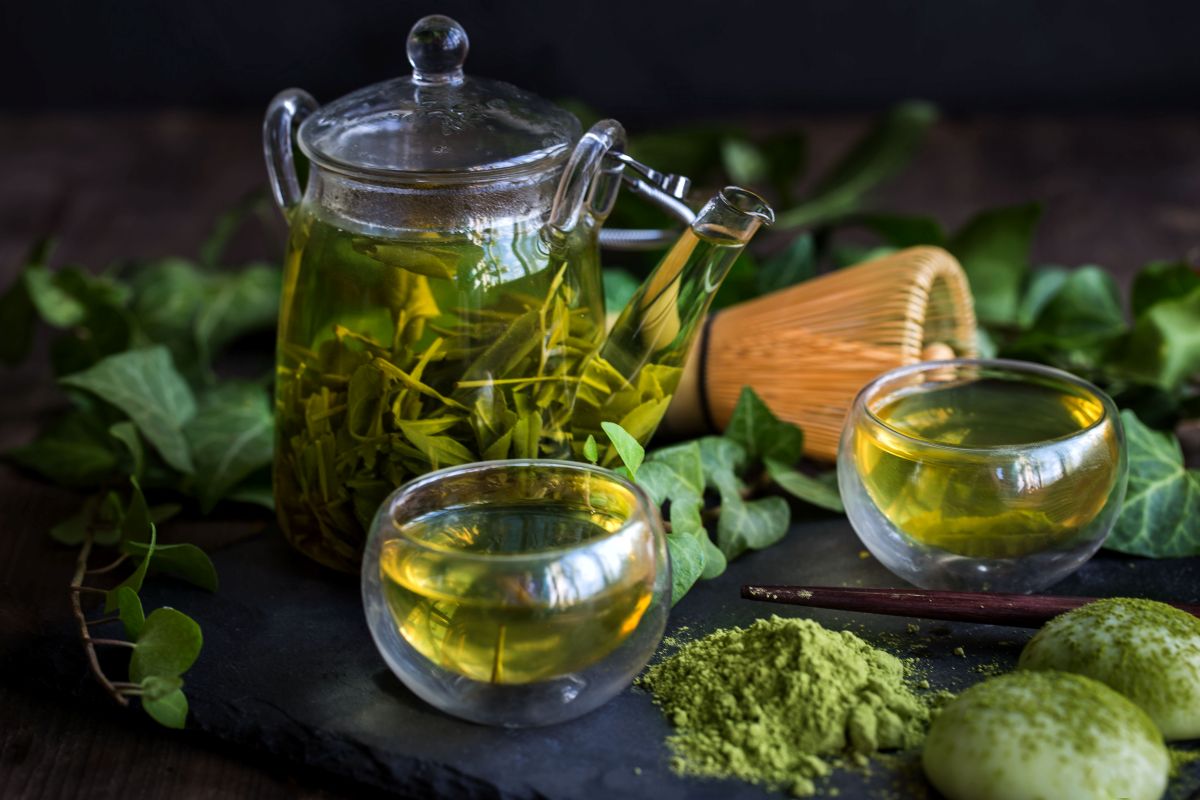
L-theanine is a naturally occurring amino acid found primarily in green tea, matcha, and certain mushrooms. Unlike many calming compounds that cause sedation or drowsiness, L-theanine is unique because it supports a state often described as “calm focus.”
To understand why it has such a powerful effect on the stress response, it’s helpful to look at what L-theanine actually does in the brain. Mechanistic research suggests that it may:
- Supports the production of GABA, the brain’s primary calming neurotransmitter
- Enhances dopamine and serotonin, which influence mood and emotional balance
- Encourages alpha brainwave activity, the mental state linked to creativity, flow, clarity, and relaxation
These mechanisms provide a strong biological foundation for L-theanine’s calming effects and help explain why it continues to be studied for stress, focus, and cortisol regulation. Human research is especially encouraging for its ability to support a calmer response during periods of acute stress.
If you’ve ever felt the smooth, steady calm of drinking a cup of green tea - without feeling sleepy - that’s L-theanine at work.
This combination of calming and focus-enhancing effects is why L-theanine has become one of the most trusted natural tools for managing mental stress, emotional overwhelm, sleep disturbances, and mood instability.
Does L-Theanine Lower Cortisol Levels?
.png)
L-theanine may temporarily reduce cortisol during acute stress, but current human evidence does not show that it consistently lowers baseline or long-term cortisol. A 2021 randomized crossover trial found a greater drop in salivary cortisol after one 200 mg dose, while longer 4-week trials have not shown a clear cortisol advantage over placebo.
The core question - does L-theanine lower cortisol - has been studied in several human and animal trials. The answer is yes: multiple studies show that L-theanine helps reduce stress-induced cortisol spikes and supports a calmer, more regulated stress response.
The human evidence is still growing, but existing trials provide encouraging signs that L-theanine can positively influence the body’s response to stress, particularly during acute stressful situations.
What selected human trials found
Several clinical trials have evaluated standardized branded forms of L-theanine, providing useful controlled data on specific doses and formulations. As research continues to expand, these findings add to the broader evidence supporting L-theanine for stress and cognitive wellbeing.
It May Reduce Acute Cortisol Spikes
In stressful moments-work pressure, emotional tension, lack of sleep, overwhelm-the body releases cortisol. L-theanine helps soften this release by calming the brain’s stress centers and improving emotional regulation.
This doesn’t eliminate cortisol entirely (which would be unhealthy), The 2021 trial provides particularly encouraging evidence, showing that a single dose of L-theanine produced a stronger cortisol reduction than placebo following an acute stress challenge. This supports its potential role in helping the body recover more smoothly from stressful situations.
Stress-related symptoms can include:
- Anxiety
- Mood swings
- Emotional eating
- Fatigue
- Restless sleep
- Brain fog
It Encourages Alpha Brainwaves
When the brain enters an alpha-wave state, relaxation can increase, but cortisol does not necessarily fall in lockstep.
L-theanine increases alpha-wave activity in some acute EEG studies, which may accompany reduced physiological signs of stress.
It May Affect the Stress Response System
L-theanine supports neurotransmitter pathways involved in emotional regulation. When GABA, dopamine, and serotonin function optimally, the stress response becomes smoother and more controlled. That mechanism is biologically plausible, but human trials have not shown that L-theanine reliably creates a healthier cortisol rhythm throughout the day.
It May Improve Sleep Quality, but Nighttime Cortisol Is Unclear
Poor sleep or frequent nighttime awakenings are closely linked with stress physiology and changes in cortisol patterns. L-theanine may help promote deeper, more restorative sleep without sedation.
A 2019 four-week crossover trial reported improvements in several sleep-related scores, but it did not establish that L-theanine lowers nighttime cortisol. For a fuller explanation of the sleep side of this relationship, how cortisol affects sleep covers the timing and rhythm questions in more detail.
Taken together, the current evidence fits short-term stress-response support better than a claim that L-theanine consistently lowers cortisol across the day.
L-Theanine Benefits for Stress, Mood & Focus
Because L-theanine influences both the nervous system and cortisol production, its benefits extend far beyond simple stress relief. Here are the key ways this amino acid supports whole-body wellness:
- Calmer Stress Response: L-theanine may help reduce the intensity of stressful moments and promote smoother emotional processing. You may feel calmer, clearer, and more grounded-even during high-pressure situations.
- Improved Mood Stability: By supporting serotonin and dopamine pathways, L-theanine may help regulate mood fluctuations, irritability, low motivation, and emotional sensitivity.
- Better Sleep Quality: L-theanine may promote calm without causing drowsiness, making it a potential option for people who struggle to “shut off” at night. This may lead to more restorative sleep and fewer middle-of-the-night wakeups.
- Supports Stress-Related Eating Patterns: Stress can increase cravings for sugar, carbohydrates, and salty foods. By promoting a calmer mental state and supporting stress management, L-theanine may help address one of the factors that can contribute to emotional or stress-related eating.
- Enhanced Cognitive Function: Some trials report improvements in focus, attention, reaction time, and mental clarity, especially when paired with caffeine. A 2026 meta-analysis found the clearest short-term signal for attention, while stress and anxiety effects were smaller or inconsistent.
- Supports a Calmer Hormonal Environment: L-theanine’s strongest evidence relates to stress, relaxation, sleep, and cognitive function. Because stress can interact with many aspects of hormonal wellbeing, these benefits may be especially valuable for women navigating PMS, PCOS, perimenopause, menopause, or other periods when stress sensitivity feels heightened.
While L-theanine is not a treatment for hormone-related conditions, its ability to support calm, sleep, and stress resilience makes it a useful ingredient within a broader hormone-supportive lifestyle.
How L-Theanine Works in the Body
To understand how L-theanine may influence stress and attention, it helps to look at the mechanisms behind its benefits.
1. Activates Alpha Brainwaves
Alpha waves create the mental state associated with calm alertness. Increased alpha activity is associated with reduced anxiety, tension, and excessive worry. Acute EEG studies have found higher alpha power after L-theanine in some settings.
2. Supports Calming Neurotransmitters
L-theanine increases levels of:
- GABA: Reduces stress signals
- Dopamine: Boosts motivation & focus
- Serotonin: Supports emotional stability
The proposed mechanism is that this combination enhances both mood and mental clarity, but human outcomes vary by study.
Together, these neurotransmitter pathways provide a compelling explanation for L-theanine’s combination of calm, focus, and emotional steadiness and support continued research into its effects on cortisol and the wider stress response.
3. May Lower Sympathetic Nervous System Activation
Chronic stress keeps the body stuck in fight-or-flight mode. L-theanine helps shift the body out of this tense state, making it easier for cortisol to settle.The direct human evidence is strongest in acute stress models rather than chronic cortisol disorders.
4. May Support Healthy HPA-Axis Signaling
The hypothalamic-pituitary-adrenal axis plays a central role in regulating cortisol and the body’s response to stress.
L-theanine is increasingly being studied for its influence on stress signaling and nervous-system regulation. While researchers are still determining its full effect on daily cortisol rhythms, existing findings suggest that it may help support a calmer and more adaptive response to stressful situations.
Combined with its effects on alpha brainwaves and calming neurotransmitter pathways, this makes L-theanine a particularly interesting ingredient for supporting everyday stress resilience.
How to Use L-Theanine for Best Results

Human stress studies commonly use 200-400 mg of L-theanine per day, providing a useful research-backed reference range for stress-support formulations.
Best Times to Take It
- Morning: To reduce daytime stress, support focus, and prevent cortisol spikes.
- Afternoon: To avoid mid-day crashes or emotional eating caused by stress hormones.
- Evening: To improve relaxation and support deeper sleep.
With or Without Food
L-theanine can be taken on an empty stomach or with meals-its absorption is flexible.
Stacking with Caffeine
Pairing L-theanine with caffeine improves alertness and focus in some controlled trials. The combination has been studied more for attention and mood than for preventing a caffeine-related cortisol rise. Harmonia’s discussion of caffeine and cortisol covers that separate question.
Daily Use May Offer Broader Stress-Support Benefits
L-theanine works relatively quickly, making it useful for acute stress support, while longer studies have also reported benefits in areas such as stress perception, sleep, mood, and cognition. Research is still establishing whether daily use produces progressively greater cortisol changes, but its broader stress-support benefits make consistent use an appealing option for many people.
Who Might Consider L-Theanine for Stress Support?
L-theanine is ideal for people who experience:
- Chronic stress
- Mood fluctuations or irritability
- Brain fog or trouble focusing
- Emotional eating or sugar cravings
- Difficulty falling or staying asleep
- Afternoon crashes
- Hormonal imbalance (PCOS, perimenopause, menopause)
Because L-theanine is gentle and non-sedative, it works well for women who need calmness without losing mental clarity or energy. If you are pregnant, breastfeeding, taking medication, or managing a medical condition, check with a qualified clinician before using a supplement.
Where Harmonia Fits
L-theanine already has encouraging research behind it for calm focus, stress response, attention, and acute cortisol support. Harmonia takes that foundation further by combining L-theanine with a broader blend of clinically researched ingredients chosen to support different aspects of the stress-response picture.
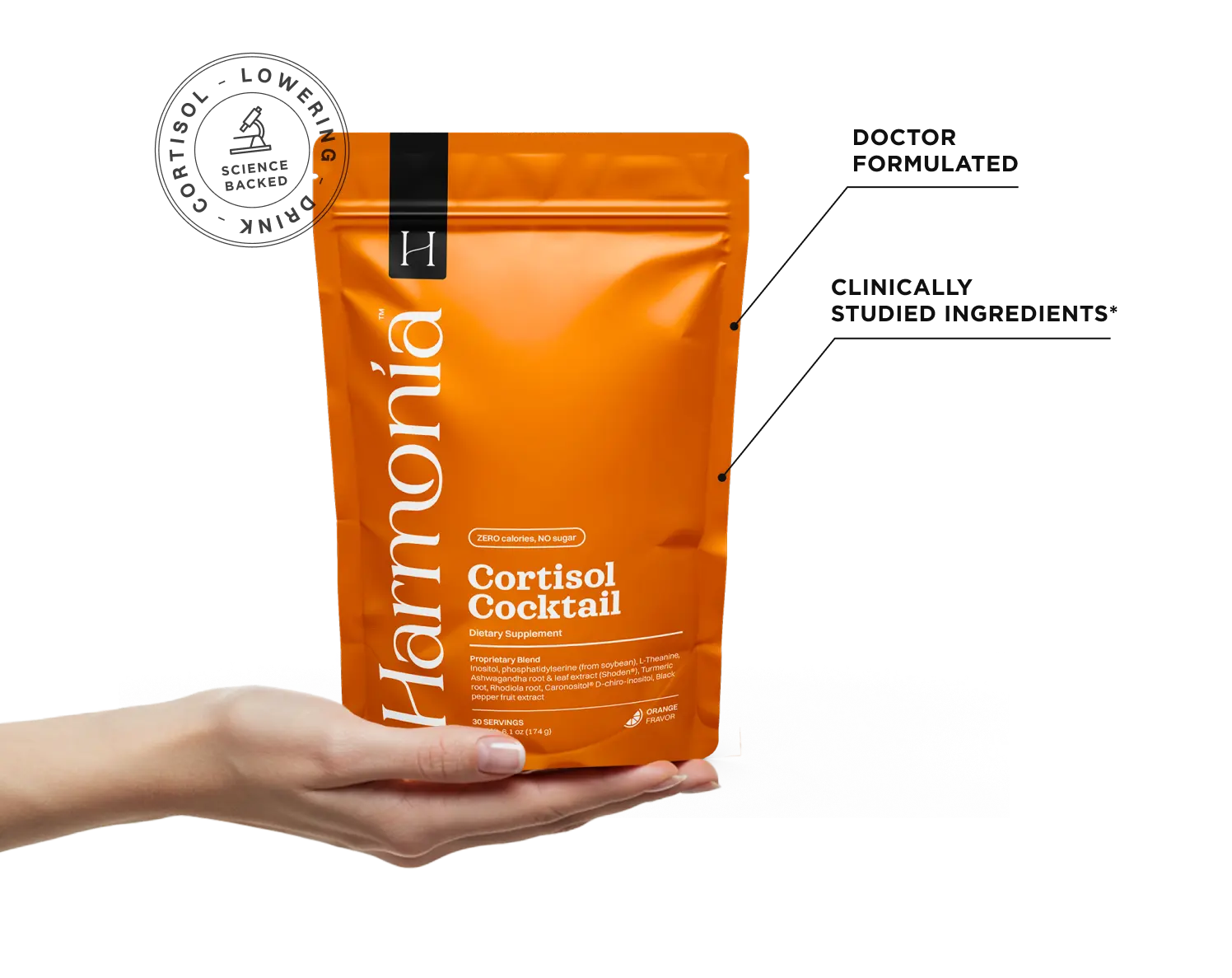
Harmonia’s Cortisol Cocktail includes:
- Ashwagandha: One of the strongest ingredients in the formula for stress support, with human trials reporting improvements in perceived stress and cortisol in stressed populations.
- Rhodiola Rosea: Supports stress resilience, energy, mental performance, and resistance to stress-related fatigue.
- Phosphatidylserine: Has been studied for its ability to influence cortisol responses during periods of physical stress.
- Myo-Inositol + D-Chiro Inositol: Support healthy insulin signaling and metabolic balance, particularly in research involving insulin resistance and PCOS.
- L-Theanine: Promotes calm without sedation and has shown promising acute cortisol, stress, and attention benefits.
- Black Pepper Extract: Helps improve absorption of key active ingredients.
- Essential Vitamins & Minerals: Vitamin C, Vitamin D, B6, Folate, B12, Magnesium, Chromium, and Potassium provide additional nutritional support.
Rather than relying on a single ingredient or pathway, Harmonia brings multiple complementary ingredients together in one convenient, caffeine-free daily drink. For people whose stress shows up through sleep disruption, low energy, cravings, mental overload, or feeling constantly “wired,” this broader formulation offers a more comprehensive approach than L-theanine alone.
Final Verdict

The research around L-theanine is encouraging. Human trials suggest it can support a calmer stress response, improve relaxation without sedation, enhance attention, and reduce cortisol during acute stress in some settings. Its ability to promote calm focus makes it particularly appealing for everyday stress support, whether used during demanding days or as part of a regular wellness routine.
For those who want the benefits of L-theanine within a more comprehensive formula, the Harmonia Cortisol Cocktail combines L-theanine combines it with ashwagandha, Rhodiola rosea, phosphatidylserine, inositols, vitamins, minerals, and other supportive ingredients designed to address different parts of the stress-response picture.
If stress keeps showing up in your sleep, energy, cravings, or day-to-day mood after the basics are covered, you can take the quiz to see whether the Harmonia Cortisol Cocktail fits what you are experiencing.
FAQs
How long does L-theanine take to work?
Some acute studies measure effects within 1-3 hours. In the 2021 cortisol trial, the significant between-group cortisol difference was measured 1 hour after a single 200 mg dose.
Can I take L-theanine daily?
Short-term randomized trials have generally found L-theanine to be well tolerated, including studies lasting 4 weeks. That does not establish indefinite long-term safety for every person, so regular use should still account for medications, pregnancy, breastfeeding, and individual medical conditions.
Does L-theanine help with anxiety?
Research is mixed. A 2026 meta-analysis found inconsistent anxiety effects across randomized trials, while an earlier systematic review found potential stress and anxiety benefits in some stressful conditions.
Will it make me sleepy?
Usually no. It promotes relaxation without sedation. Individual responses can still vary.
How much does L-theanine lower cortisol?
The amount can vary between individuals and study settings, but one small 2021 crossover trial reported an encouraging result: salivary cortisol fell 42.4% after L-theanine compared with 32.6% after placebo following a single 200 mg dose. This provides direct human evidence that L-theanine can positively influence cortisol during acute stress, while additional research continues to explore its longer-term effects.
Is L-theanine an adaptogen?
L-theanine is an amino acid found naturally in tea, not an adaptogenic herb. It can influence stress-related signaling, but the term adaptogen is generally used for certain botanicals such as ashwagandha or rhodiola.
Is 100 mg of L-theanine enough for cortisol?
There is no established cortisol-lowering dose. The positive acute cortisol trial used 200 mg of L-theanine, while other studies have evaluated daily intakes of 200-400 mg. This makes 200 mg a particularly useful reference point when looking at the human research on L-theanine and acute stress responses.
References
- Gerolymos, C., Saddier, E., Boyer, L., & Fond, G. (2026). Cognitive and affective effects of L-Theanine: a systematic review and meta-analysis of 31 randomized trials. Molecular Psychiatry. Link.
- Moulin, M., Crowley, D. C., Xiong, L., Guthrie, N., & Lewis, E. D. (2024). Safety and efficacy of AlphaWave L-theanine supplementation for 28 days in healthy adults with moderate stress: a randomized, double-blind, placebo-controlled trial. Neurology and Therapy, 13, 1135-1153. Link.
- Evans, M., McDonald, A. C., Xiong, L., Crowley, D. C., & Guthrie, N. (2021). A randomized, triple-blind, placebo-controlled, crossover study to investigate the efficacy of a single dose of AlphaWave L-theanine on stress in a healthy adult population. Neurology and Therapy, 10, 1061-1078. Link.
- Hidese, S., Ogawa, S., Ota, M., Ishida, I., Yasukawa, Z., Ozeki, M., & Kunugi, H. (2019). Effects of L-theanine administration on stress-related symptoms and cognitive functions in healthy adults: a randomized controlled trial. Nutrients, 11(10), 2362. Link.
- Wang, L., Brennan, M., Li, S., Zhao, H., Lange, K. W., & Brennan, C. (2022). How does the tea L-theanine buffer stress and anxiety. Food Science and Human Wellness, 11(3), 467-475. Link.
- Williams, J. L., Everett, J. M., D’Cunha, N. M., Sergi, D., Georgousopoulou, E. N., Keegan, R. J., ... & Naumovski, N. (2020). The effects of green tea amino acid L-theanine consumption on the ability to manage stress and anxiety levels: a systematic review. Plant foods for human nutrition, 75(1), 12-23. Link.
- Payne, E. R., Aceves-Martins, M., Dubost, J., Greyling, A., & de Roos, B. (2025). Effects of tea (Camellia sinensis) or its bioactive compounds L-theanine or L-theanine plus caffeine on cognition, sleep, and mood in healthy participants: a systematic review and meta-analysis of randomized controlled trials. Nutrition Reviews, 83(10), 1873-1891. Link.